Drone Strikes Barakah Nuclear Plant Perimeter in UAE
A drone strike sparked a fire at the perimeter of the UAE's Barakah nuclear power plant Sunday — the IAEA expressed "grave concern" as Iran-UAE tensions escalate past the ceasefire.
KEY TAKEAWAYS
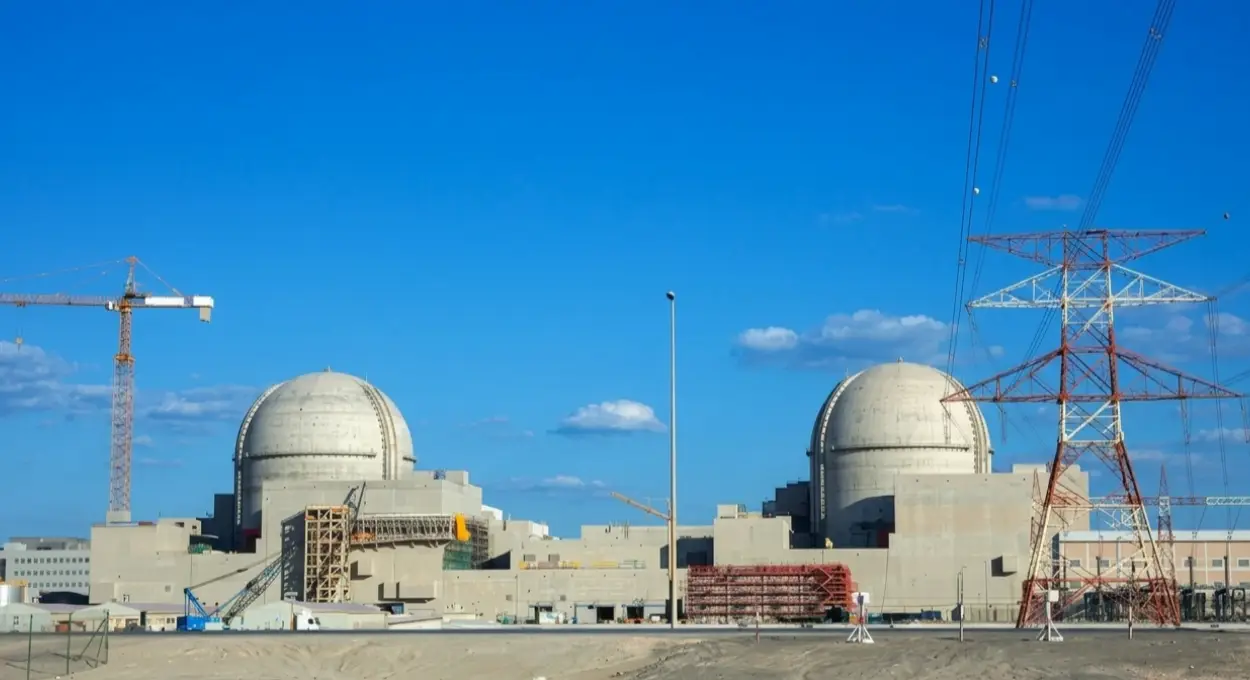
A drone struck an electrical generator on the outer perimeter of the UAE's Barakah Nuclear Energy Plant on Sunday — sparking a fire in the Al Dhafra region
UAE air defences intercepted two drones — a third got through and hit the generator outside the plant's inner perimeter
The IAEA said one reactor was forced to temporarily rely on emergency diesel generators — chief Rafael Grossi called the incident "grave concern"
Radiation levels remained normal — plant operations were not disrupted — "all units operating as normal"
The UAE said the drones were launched from the "western border" — no country has been formally blamed
Qatar condemned the attack as a "flagrant violation of international law" and a "serious threat to regional security"
Despite the April 8 ceasefire, drone attacks on UAE territory have continued — including last week's strike on Fujairah's oil facilities
Drone Hits Barakah Nuclear Plant Perimeter — IAEA Warns of 'Grave Concern'
A drone strike sparked a fire at the outer perimeter of the UAE's Barakah Nuclear Energy Plant on Sunday — forcing one reactor onto emergency diesel generators and drawing a stark warning from the International Atomic Energy Agency — as attacks on Emirati territory continue despite a fragile ceasefire between Iran and the United States that has been in place since April 8.
The UAE's Defence Ministry confirmed that air defences successfully intercepted two drones, but a third broke through and struck an electrical generator located outside the plant's inner perimeter in the Al Dhafra region — approximately 225km west of Abu Dhabi, near the Saudi Arabian border.
What Hit Barakah — and What Didn't
The Attack in Detail
Abu Dhabi authorities confirmed the fire broke out at an external electrical generator — outside the nuclear facility's inner perimeter, not inside the plant itself.
No injuries were reported. The UAE's nuclear regulator moved quickly to reassure the public.
"All units are operating as normal," the regulator posted on social media Sunday, confirming that radiation levels remained normal throughout the incident.
Where the Drones Came From
The UAE Defence Ministry said the drones were launched from the "western border" — without specifying a country — and confirmed that investigations are underway to determine the source of the attack.
No group has claimed responsibility. The UAE has made no formal public accusation against any state.
IAEA: 'Grave Concern' Over Nuclear Facility Being Targeted
The International Atomic Energy Agency did not use soft language in its response.
IAEA chief Rafael Grossi expressed "grave concern" over the incident — stating that any military activity that threatens nuclear facilities is "unacceptable" under any circumstances.
The agency confirmed that the strike forced one of Barakah's reactors to temporarily switch to emergency diesel generators — a contingency measure that, while functional, underlines how close the attack came to disrupting the plant's core operations.
Barakah is the first nuclear power station on the Arabian Peninsula — making any attack on or near it an event of international significance well beyond the UAE's borders.
Qatar Condemns the Strike
Neighbouring Qatar moved swiftly to condemn Sunday's attack in firm diplomatic terms.
Qatar's Foreign Ministry described the drone strike as a "flagrant violation of international law" and a "serious threat to regional security and stability."
It called for immediate de-escalation — stressing the need to avoid the consequences of "unjustified attacks" and to restore stability at both regional and international levels.
The Ceasefire That Is Not Holding
A Pattern of Continued Attacks
The April 8 ceasefire between Iran and the United States was supposed to bring an end to hostilities across the Gulf. For the UAE, it has not.
Drone and missile attacks on Emirati territory have continued since the ceasefire took effect — making Sunday's Barakah strike the latest in a series of incidents that have steadily escalated.
Last Week's Fujairah Strike
Just days before Sunday's nuclear plant incident, Iranian drones and missiles struck the port city of Fujairah — hitting an oil facility in the Fujairah Oil Industry Zone, wounding three Indian nationals, and starting a fire at the site.
Key Timeline of UAE Attacks Since February 28
February 28: US-Israel bombing of Iran begins — Iran warns countries hosting US bases could be targeted
April 8: US-Iran ceasefire announced
Last week: Missiles and drones strike Fujairah — oil facility fire, three injured
Sunday May 17: Drone strikes Barakah nuclear plant perimeter — one reactor on emergency power temporarily
Why the UAE Has Become a Target
The Iran-UAE Breakdown
Iran has accused the UAE of deepening its military and intelligence ties with both the United States and Israel — a charge Abu Dhabi does not deny in principle, though it rejects Iranian characterisations of its motivations.
The UAE hosts al-Dhafra airbase — a major US military installation — and received Israeli Iron Dome missile defence batteries and operating personnel last week, confirmed by US Ambassador to Israel Mike Huckabee.
Reports also emerged claiming Israeli Prime Minister Benjamin Netanyahu made a secret visit to the UAE during the conflict. The UAE flatly denied the visit took place.
The UAE's Position
The UAE's Foreign Ministry issued a statement Friday rejecting Iranian attempts to justify attacks on its territory — and reserved the right to respond to any future threats through all available means.
What Happens Next: Three Scenarios
With a nuclear plant now struck — even on its perimeter — and the ceasefire continuing to fail in practice, the situation faces three possible directions.
Scenario 1: IAEA Pressure Forces De-escalation
Grossi's "grave concern" statement triggers urgent diplomatic intervention. The US and regional partners pressure Iran to halt attacks on UAE civilian and nuclear infrastructure. The ceasefire gains real teeth for the first time.
Scenario 2: UAE Retaliates — Conflict Widens
The Barakah strike crosses a line for Abu Dhabi. The UAE exercises its stated right to respond militarily. Iran retaliates. The ceasefire collapses entirely — and the Gulf enters a new phase of direct armed confrontation.
Scenario 3: Attacks Continue, Ceasefire Becomes Meaningless
Neither side escalates dramatically — but drone attacks on UAE territory continue at their current pace. The ceasefire exists on paper only. International pressure builds but produces no change. Barakah becomes a recurring target rather than a one-off incident.
Sign up for ContentNest
Join the ContentNest Community
Subscribe to receive our latest articles, trending stories, and weekly insights directly in your inbox.
By signing up, you agree to our Privacy Policy