US and Iran Hold Direct War Talks in Pakistan's Capital
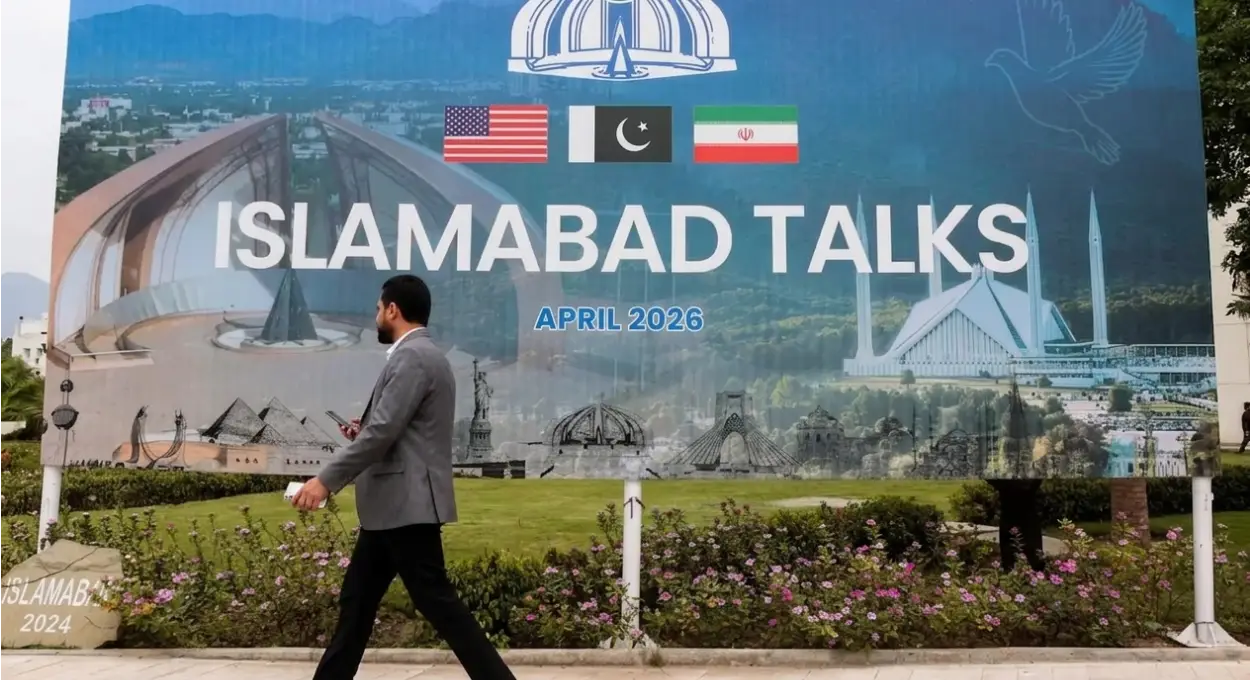
The US and Iran launched direct face-to-face talks in Islamabad on Saturday to end their six-week war — with JD Vance leading the US side and Iran's Ghalibaf heading a 70-person delegation.
KEY TAKEAWAYS
The US and Iran began direct face-to-face talks in Islamabad on Saturday afternoon — confirmed by the White House
The US delegation is led by Vice President JD Vance and includes special envoy Steve Witkoff and Jared Kushner
Iran's delegation of more than 70 people is led by Parliament Speaker Mohammad Bagher Ghalibaf and Foreign Minister Abbas Araghchi
Both sides held separate bilateral meetings with Pakistani Prime Minister Shehbaz Sharif before direct talks began
Iranian state media said three-party talks started after Iranian preconditions — including reduced Israeli attacks on Lebanon — were partially met
Sources say there has been "some progress" on Lebanon ceasefire conditions and a possible movement on unfreezing Iranian assets
The Strait of Hormuz blockade and the Lebanon war remain unresolved — the two biggest obstacles to any permanent deal
US and Iran Sit Down Face-to-Face in Islamabad to End Their Six-Week War
The United States and Iran launched direct in-person negotiations in Islamabad on Saturday — the most significant diplomatic contact between the two countries since their war began on February 28 — as Pakistani Prime Minister Shehbaz Sharif brought both delegations to the table just days after a fragile two-week ceasefire halted US and Israeli air strikes on Iran.
What began as planned "proximate talks" — with Pakistani mediators shuttling between separate rooms — evolved into direct negotiations with both US and Iranian delegations in the same room, Pakistani mediators present alongside them.
Who Is at the Table
The US Delegation
The American team is led by Vice President JD Vance — a signal of just how seriously Washington is treating these talks.
The delegation also includes:
Steve Witkoff — Trump's special envoy
Jared Kushner — Trump's son-in-law and senior adviser
Iran's 70-Person Delegation
Iran arrived with a delegation of more than 70 people — the largest Iranian diplomatic team deployed for any negotiation in years.
It is led jointly by:
Mohammad Bagher Ghalibaf — Iran's Parliament Speaker and its chief war negotiator
Abbas Araghchi — Iran's Foreign Minister
How the Talks Got Started
The Bilateral Meetings With Sharif
Before direct talks began, both sides held separate meetings with Pakistani Prime Minister Shehbaz Sharif on Saturday morning.
Sharif's office said Pakistan looked forward to continuing its facilitation role and expressed hope that the talks "would serve as a stepping stone toward durable peace in the region."
The Iranian Preconditions
The talks nearly did not happen at all.
Tehran had previously stated it would not enter negotiations without concrete commitments on two issues — Lebanon's inclusion in the ceasefire framework and movement on US sanctions relief.
Ghalibaf wrote on X that Washington had previously agreed to unblock Iranian assets and to a ceasefire in Lebanon — where Israeli attacks on Iran-backed Hezbollah fighters have killed nearly 2,000 people since fighting escalated in March.
Iran ultimately entered the room. Iranian state media confirmed that three-party talks started after preconditions — including a reduction in Israeli attacks on Lebanon — were met to a sufficient degree.
What Sources Say Is Moving
Neither delegation made formal announcements after Saturday's sessions — but sources close to the mediation gave ground-level assessments.
Lebanon
Israel and the US have maintained that their Lebanon campaign is separate from the Iran-US ceasefire — Tehran and Pakistan say it is not.
Sources said there had been "some progress made on basic conditions, including on the need for a ceasefire in Lebanon" — and reports emerged of a possible understanding to limit Israeli strikes to southern Lebanon specifically, rather than broader Lebanese territory.
No formal Lebanon ceasefire has been agreed.
Iranian Frozen Assets
Sources also indicated there "could be some movement on the unfreezing" of Iranian assets held abroad — one of Tehran's core demands since the war began.
Caution was stressed:
"It is still early hours and a lot of this needs to be confirmed," one source said — but Pakistan remained "very hopeful about the possibility of a breakthrough."
What Each Side Said Going In
Ghalibaf: 'Our Experience With Americans Has Always Been Failure'
Iran's chief negotiator did not arrive in Islamabad with optimism on display.
"Our experience in negotiating with the Americans has always been met with failure and broken promises," Ghalibaf said shortly after landing in Pakistan.
He added that Iran was ready to reach a deal — but only if Washington offered "a genuine agreement" and granted Iran its rights.
Vance: 'If They Try to Play Us, We Won't Be Receptive'
JD Vance projected confidence heading into Islamabad — but drew a clear line.
"I expected a positive outcome," Vance said, adding: "If they're going to try to play us, then they're going to find the negotiating team is not that receptive."
Trump: 'The Only Reason They Are Alive Today Is to Negotiate'
Trump took to social media with his own framing of Iran's position — characteristically blunt.
"The Iranians don't seem to realize they have no cards, other than a short term extortion of the World by using International Waterways. The only reason they are alive today is to negotiate!" he posted.
What the Ceasefire Covers — and What It Does Not
Trump announced a two-week ceasefire on Tuesday — halting US and Israeli air strikes on Iran.
But the ceasefire has not resolved the two most economically and militarily significant elements of the conflict:
The Strait of Hormuz blockade: Iran's closure of the waterway — through which 20% of global oil and gas previously flowed — has caused the largest disruption to global energy supplies in history and remains fully in effect
The Lebanon war: Israel's campaign against Iran-backed Hezbollah continues — Tehran insists it must be part of any comprehensive deal; Washington and Israel say it is a separate conflict
Both issues sit at the centre of Saturday's Islamabad talks — and both remain unresolved heading into the negotiations.
Pakistan's Role: From Facilitator to Host
Pakistan has spent weeks carrying proposals back and forth between Washington and Tehran — a mediating role it pursued through multiple high-level visits including army chief Field Marshal Asim Munir's Tehran trip and Interior Minister Mohsin Naqvi's two-day visit last week.
Saturday's direct talks in Islamabad represent the most tangible result of that effort — transforming Pakistan from a message carrier into the host of the most consequential Iran-US diplomatic encounter in years.
Prime Minister Sharif described Islamabad as "looking forward to continuing its facilitation" — language that signals Pakistan intends to remain central to whatever process emerges from Saturday's sessions.
What Happens Next: Three Scenarios
With direct talks underway, both sides in the same room, and sources cautiously optimistic, the Islamabad negotiations face three possible directions.
Scenario 1: Partial Deal Reached — Hormuz and Lebanon Partially Addressed
Both sides agree on a framework that limits Israeli strikes in Lebanon to the south and begins a process for unfreezing Iranian assets. The Strait of Hormuz reopens partially under a negotiated arrangement. A longer-term ceasefire replaces the two-week pause.
Pakistan claims a historic diplomatic win.
Scenario 2: Talks Collapse on Nuclear Demands
US demands for a 20-year enrichment moratorium and facility dismantlement are reintroduced. Iran walks out. The two-week ceasefire expires without a successor agreement. Both sides return to military posture. Islamabad's mediation effort fails at the final stage.
Scenario 3: Framework Agreed, Details Drag On for Months
Both sides agree to a broad framework — enough to extend the ceasefire and avoid renewed bombing. But the core issues — nuclear programme, Hormuz sovereignty, Lebanon, frozen assets — are left for follow-on negotiations. The war enters a frozen phase with no resolution in sight but no active fighting either.
Sign up for ContentNest
Join the ContentNest Community
Subscribe to receive our latest articles, trending stories, and weekly insights directly in your inbox.
By signing up, you agree to our Privacy Policy