
Hantavirus Cruise Ship MV Hondius Docks in Rotterdam
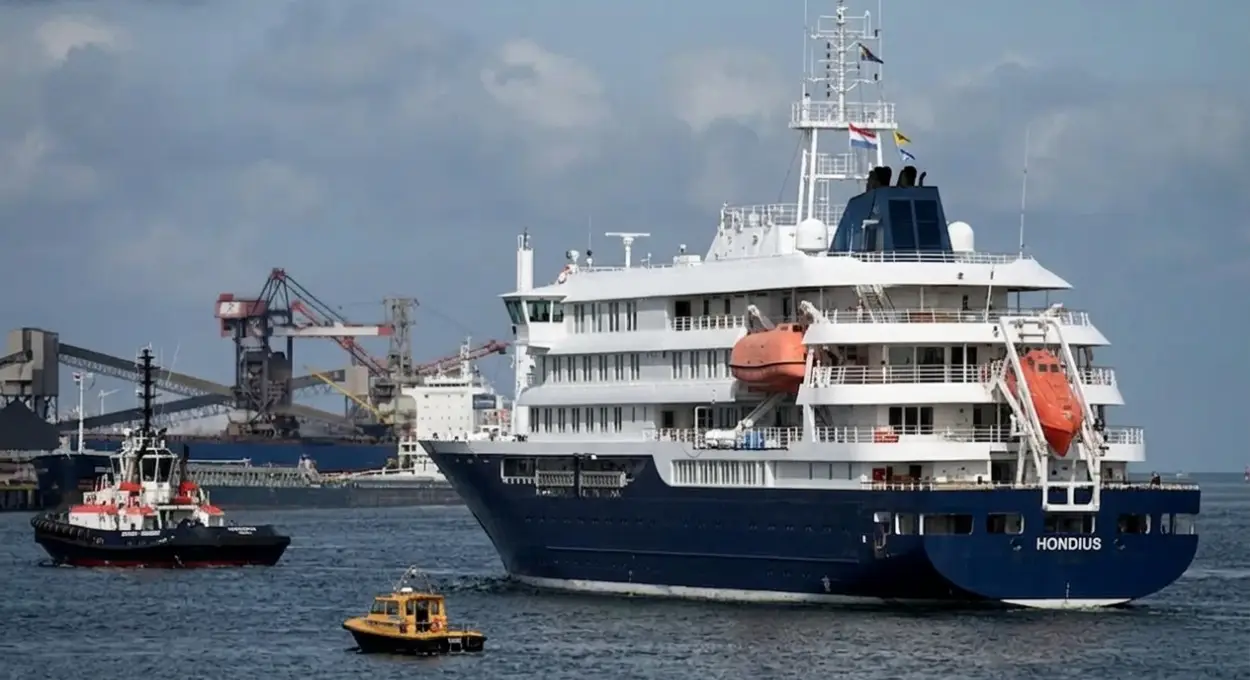
The hantavirus-hit cruise ship MV Hondius docked in Rotterdam Monday for disinfection — as crew entered quarantine and a Canadian passenger tested positive for the Andes virus.
KEY TAKEAWAYS
The MV Hondius docked in Rotterdam on Monday carrying 25 crew members and two medical personnel — all passengers had already disembarked at earlier stops
Three passengers died in the outbreak — including a Dutch couple believed to be the first infected after visiting South America
At least 11 cases of infection were recorded on board — nine confirmed, the rest under investigation
A Canadian passenger tested positive for hantavirus on Sunday — Canada's Public Health Agency is sharing data with the WHO
The WHO maintained its "low risk" assessment Sunday — saying onward transmission risk has reduced since disembarkation and containment measures began
France's Pasteur Institute fully sequenced the Andes virus strain — finding it matches known South American variants with no new dangerous characteristics
This is the first known hantavirus outbreak ever recorded on a cruise ship
Hantavirus Cruise Ship MV Hondius Docks in Rotterdam for Full Disinfection
The MV Hondius — the cruise ship at the centre of the world's first hantavirus outbreak on a passenger vessel — docked in the Dutch port of Rotterdam on Monday, carrying 25 crew members and two medical personnel, as authorities prepared to quarantine those on board and begin a full decontamination of the ship under Dutch public health protocols.
All passengers had already disembarked at earlier locations — the last group evacuated from the Canary Islands, from where they boarded flights to more than 20 countries to enter quarantine. Ship operator Oceanwide Expeditions confirmed that no one currently on board is experiencing any symptoms.
What Awaited the Crew in Rotterdam
White quarantine containers had been set up along the waterfront near the ship's docking point before the Hondius arrived.
Crew members unable to be immediately repatriated will spend their quarantine period in those containers — a controlled environment designed to prevent any further transmission while travel arrangements are made.
Some two dozen passengers and crew members had already been in quarantine in the Netherlands after arriving on separate flights over the past two weeks.
The Outbreak's Death Toll and Case Count
Three passengers died during the outbreak — including a Dutch couple that health officials believe were the first people on board to be exposed to the virus, likely during a visit to South America before boarding.
The full case picture stands at:
Total infections recorded: At least 11
Confirmed cases: 9
Deaths: 3
Latest positive test: A Canadian passenger — one of four Canadians in isolation — tested positive Sunday
Canadian response: The Public Health Agency of Canada confirmed the case and said it would share details with the WHO
The Hondius's Journey to Rotterdam
The ship spent six days sailing from the Canary Islands — its last passenger stop — before reaching Rotterdam on Monday.
It was during the Canary Islands stop that the remaining passengers were evacuated and dispersed to their home countries, ending the ship's passenger-carrying phase of this voyage and beginning the final leg back to the Netherlands for decontamination.
What Happens to the Ship Now
Once all crew members have disembarked and entered quarantine, the MV Hondius will undergo a full decontamination process based on Dutch public health guidelines.
The Dutch Health Ministry confirmed that personal protective equipment will be used throughout the cleaning process — specifically to ensure that the decontamination workers themselves will not need to quarantine after completing their work.
Dutch public health officials will conduct a formal inspection of the ship before it is cleared to sail again.
The Virus Itself: What Scientists Have Found
WHO Keeps 'Low Risk' Assessment
The WHO reviewed the situation Sunday and maintained its position that the outbreak carries a "low risk" profile for wider spread.
"While additional cases may still occur among passengers and crew members exposed before containment measures were implemented, the risk of onward transmission is expected to be reduced following disembarkation and the implementation of control measures," the WHO said.
France's Pasteur Institute Sequences the Strain
France's Pasteur Institute delivered an important finding Saturday — it had fully sequenced the Andes virus strain detected in a French passenger from the Hondius.
The results showed the virus matches known South American variants — with no evidence of new characteristics that would make it more transmissible or more dangerous than strains already documented in South America.
That finding significantly reduces concern about a mutated or more aggressive form of the virus spreading from the ship into the broader population.
A Historic — and Unwanted — First
The hantavirus outbreak on the MV Hondius is the first ever recorded on a cruise ship — making it a public health event with implications well beyond this single vessel.
Hantavirus is typically transmitted to humans through contact with infected rodents or their droppings — raising questions about how the virus reached passengers on an expedition cruise ship and what gaps in biosecurity protocols allowed the initial exposures to occur.
Those questions will likely drive the post-outbreak investigation as much as the medical response.
What Happens Next: Three Scenarios
With the ship docked, crew in quarantine, and the WHO maintaining a low-risk assessment, the situation faces three possible directions.
Scenario 1: Decontamination Clears the Ship, No New Cases
The Hondius is fully decontaminated without incident. Quarantined crew test negative. The Canadian case remains isolated. The WHO closes the outbreak investigation. The ship eventually returns to service under enhanced biosecurity protocols.
Scenario 2: New Cases Emerge Among Dispersed Passengers
Additional positive tests surface among the 20-plus countries where passengers entered quarantine. The WHO upgrades its risk assessment. National health agencies activate contact tracing. The outbreak's geographic footprint expands — though human-to-human transmission of hantavirus remains rare.
Scenario 3: Investigation Reveals a Biosecurity Failure
The source of the initial infection on board is traced to a specific location or food source during the South American leg of the voyage. Cruise industry regulators across multiple countries launch biosecurity reviews. New international standards for expedition cruising are developed in response to the world's first shipboard hantavirus outbreak.
Sign up for ContentNest
Join the ContentNest Community
Subscribe to receive our latest articles, trending stories, and weekly insights directly in your inbox.
By signing up, you agree to our Privacy Policy